The past and future in Pueblo art
With his art, Virgil Ortiz tells the story of the 1680 Pueblo revolt and of a future where his descendants return to the past to defend his ancestors.

When future and past collide, we often think of white Americans going back to kill Hitler or some weird teenager having an existential problem of his mother falling in love with him. It's either wishful or whimsical. The mainstream media doesn't much like stories that ask difficult questions. Questions like: what if the Europeans were the bad guys? (Dear reader: they were).
Soy de Nuevo Mexico. The desert is inscribed in my heart. But I am a stranger to that land. As invasive as a tumbleweed. This isn't my story, but it's one that I invite you to hear.
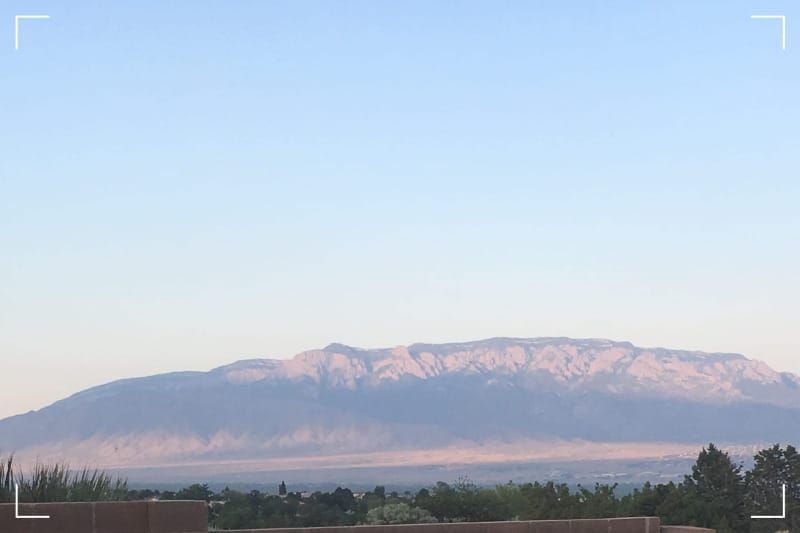
New Mexico is the land of enchantment. It is where history stretches far beyond the tracks laid by manifest destiny. It's where Sky City rests on top a mesa that has sheltered its people from storms and the Spaniards for a thousand years.
It where are invited to hear a story told by Virgil Ortiz, an artist, a member of the Cochiti Pueblo, and one of my favorite living artists.
I discovered his art when I visited the Indian Pueblo Cultural Center in Albuquerque sometime before the pandemic. The Cultural Center's museum is full of history that is not easy to hear. It's full of tragedies written in torn cloth and shattered pottery.
The grief I felt there as a white American, a descendant of the people that brought about these tragedies, was as stolen as the land I walked on. The grief wasn't mine to have, but it was my responsibility to witness it. To sit with the history and the knowledge of what my ancestors had done to theirs.
And yet the figments of history are only one of the stories that must be told. There are more that give us the vibrant reminder that these people are still here, living among us. The history is only the first part. The next are the stories of the survivors.
These are the stories of a people who remain despite the attempts of residential schools to eradicate them and their culture. These are the stories of those that survived the forced march of the Trail of Tears. These are the stories of the people who survived wave after wave of European colonizers.
Virgil Ortiz is one of those storytellers and in his ReVOlt 1680/2180 project, he tells the story of the 1680 Pueblo revolt and of a future where his descendants return to the past to defend his ancestors.
In chapter after chapter, exhibit after exhibit, he unfolds this story. Ortiz tells the story of Po'pay who gathered support from six tribes to rebel against the Spanish. To hear his story is to hear the story of how the Pueblo people defended their home. To see his art is to see how the Pueblo peoples stole the Spanish horses, destroyed their churches, and banished them from their lands. Ortiz does not tell a story of grief. He tells a story of how the Pueblos held their land against Spanish theft for twelve years.
Then time slides and the slipstream of possibility merges a revolt in the future with the one in the past. Ortiz tells stories of a daybreak of resistance, of the defenders descending from portals in time, of those who deliver messages to the front lines, and now the first strike against the Spanish occupation.
I didn't know any of this story when I saw his work at the Indian Pueblo Cultural Center. I wouldn't have even noticed it if I hadn't been in the habit of always looking up. And maybe you wouldn't have unless you'd noticed the plaque.
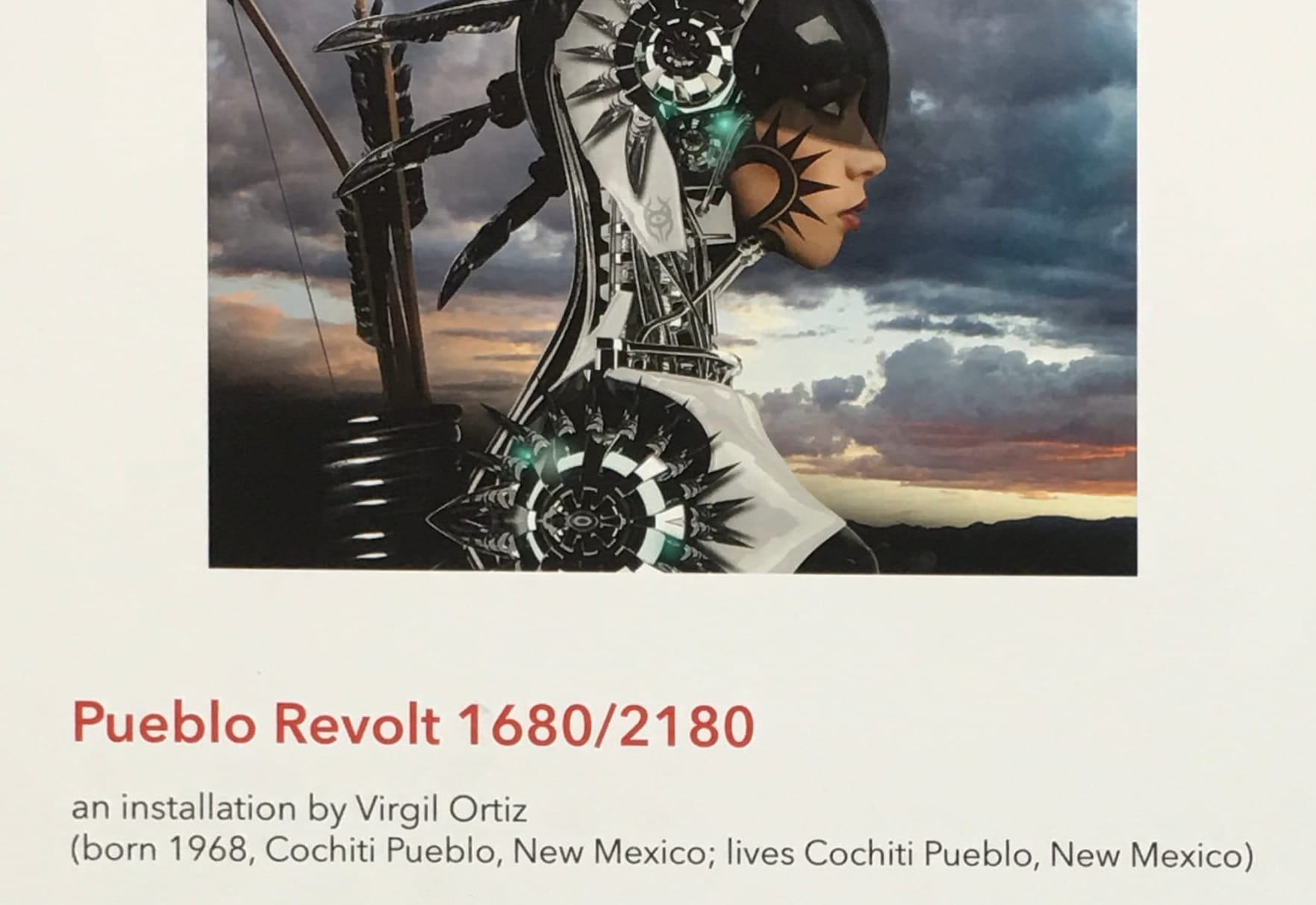
But I did look up and what I saw took my breath away.
Arrayed like sentinels on the ledge above me were life-sized kachina dolls. And they weren't the kachina dolls I knew, that I had grown up seeing.
They weren't like the ones had been displayed throughout the museum I had just walked through.
They were as tall as me and they were science fiction.
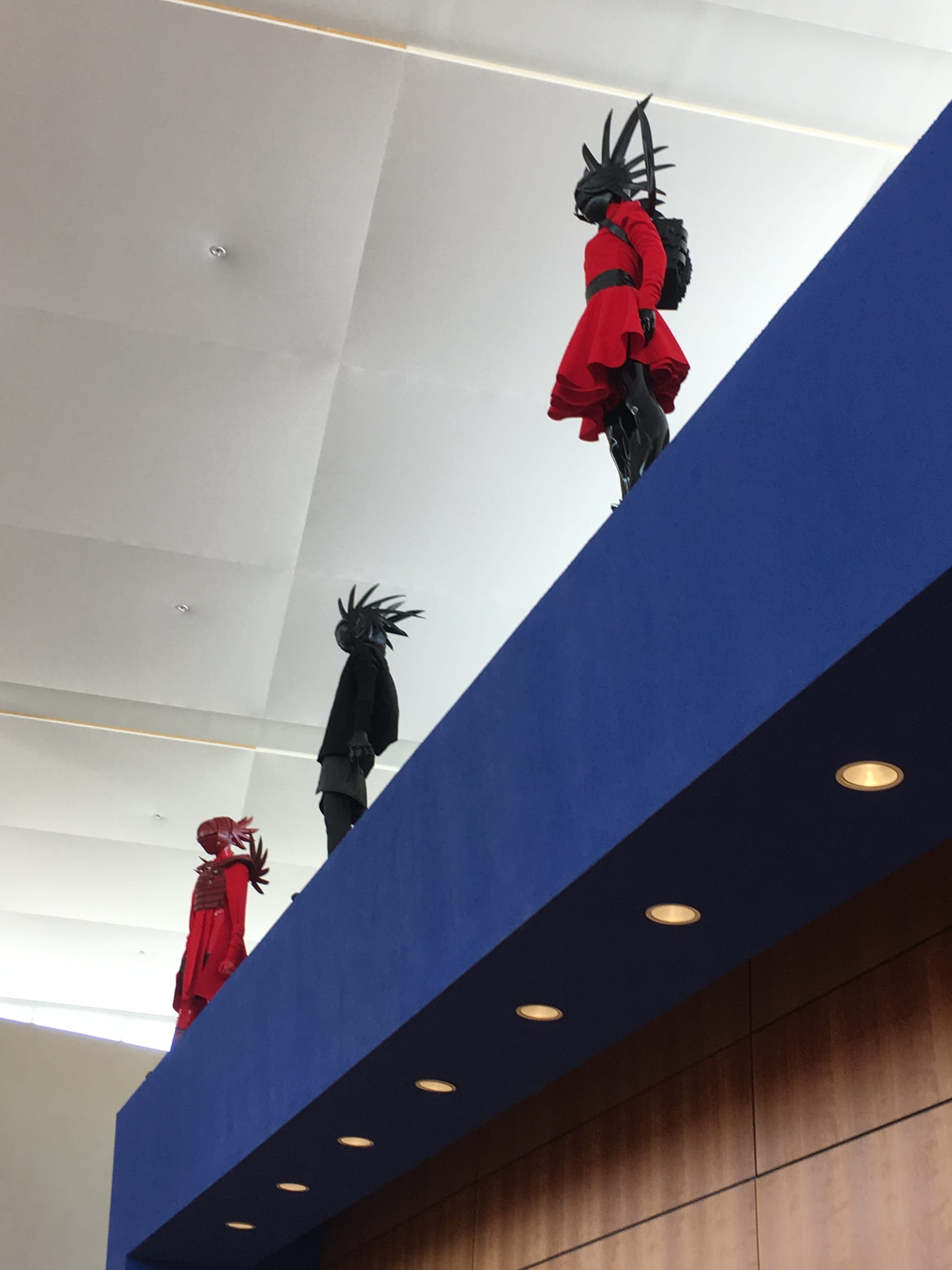
Ortiz's work stole my imagination and returned it better than it was. Like the best art, his told a story and gave me wonder. It filled me with a longing to learn more.
It invited me to sit and listen to the story of a future that I hadn't considered. A what-if of survival and resistance. The reminder of the lived and living experience of the native peoples living on the land my ancestors stole.
These people are still here. This is their story. We just have to sit and listen.
If you can make the exhibit in Santa Fe this summer, please go. Hear his story. If you can't, read stories written by indigenous authors. Check out the constellation map from Native Land Digital and see the wonder of the depth and breadth of the indigenous nations before the colonizers came.
Remember we are on stolen land.
Sit and listen.
(I have included a ton of links in this post. Some are to Wikipedia for the history, a majority are to Ortiz's art. Feel free to add more in the comments if I missed anything).